Buying a 1920s Altadena Home? A Plumbing Inspection Checklist
1920s Altadena bungalows are charming and well-built, but the plumbing systems are 100+ years old. Here's how to evaluate plumbing condition before purchase, what to negotiate, and what to budget for the first year of ownership.

If you're looking at an Altadena home built between roughly 1905 and 1930 — Janes Village bungalows, Mariposa-area craftsmans, Christmas Tree Lane cottages, or similar properties across the older neighborhoods — the plumbing requires its own evaluation separate from the general home inspection. Standard home inspectors do a basic plumbing check; they don't typically dig into the specifics that matter most for older bungalow purchases.
This guide is a practical checklist for buyers. The goal isn't to scare you away from a 1920s home; the goal is to know what you're walking into so you can negotiate fairly and budget accurately for the first year of ownership.
What to look at during the open house
Before you've made an offer, you can do useful informal evaluation yourself.
Run the water at every fixture. Turn on hot and cold at each sink, bathtub, and shower. Watch the color of the water for the first 10-15 seconds. Hot water that runs rust-colored, yellow, or brown indicates galvanized pipe is failing internally and depositing scale.
Check pressure. Run multiple fixtures at once. If pressure drops dramatically when you add a second or third fixture, the supply system is restricted (typically interior rust scale in galvanized lines).
Flush toilets and watch. The tank should refill within 30-60 seconds. Slow refill suggests partial blockage in the supply.
Look at exposed pipe at the water heater and under sinks. Galvanized has a dull silvery-gray color and threaded fittings. Copper is reddish. PEX is colored plastic (white, blue, or red). All-galvanized in a 100-year-old home is the expected baseline and tells you what condition to expect.
Note the water heater's age and condition. Most water heaters have manufacturer stickers with date codes. A water heater over 12 years old is past expected lifespan and likely to need replacement soon.
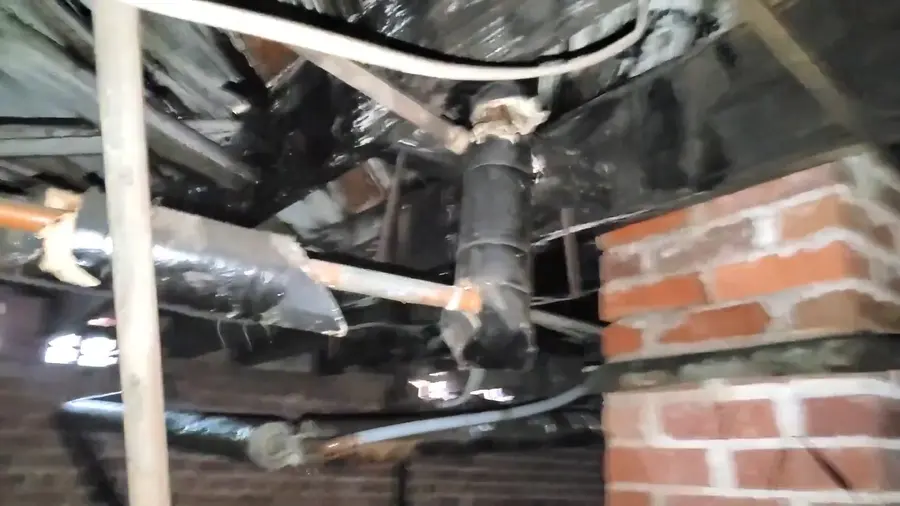
Look at the foundation crawlspace if accessible. Visible pipe in the crawlspace tells you a lot. Multiple repairs or patches suggest a system that's been failing in pieces. Heavy rust staining on cast iron drains indicates advanced age. Standing water suggests existing leaks.
Questions to ask the seller
Sellers are required to disclose known defects. Specific questions get better information than open-ended ones.
When was the home last repiped (or has it been)? Original galvanized in a 1920s home is a meaningful negotiation point; recent repipe is a meaningful asset.
When was the sewer lateral last inspected by camera? Cast iron and clay tile laterals from 1920s installations are essentially all at end of service life. Recent camera inspection records are valuable.
What plumbing repairs have been done in the past 5 years? Multiple slab leak repairs, multiple pinhole leaks, or multiple sewer backups indicate ongoing issues that may continue.
What's the age of the water heater? Anything over 10-12 years should be priced into the budget for near-term replacement.
Has there been water damage from plumbing failure that's been repaired? Knowing the history tells you whether the underlying issues were addressed or just patched.
What to ask the inspector to focus on
Standard home inspections cover plumbing at a basic level. For a 1920s home, ask the inspector to spend extra time on:
Identification of supply pipe material throughout the visible portions of the system, with notes on visible condition.
Identification of drain pipe material with notes on visible corrosion or staining.
Identification of the sewer lateral material at the cleanout (if accessible) and recommendation on whether camera inspection is warranted.
Water pressure measurement at multiple fixtures, with notes on whether pressure suggests scale buildup.
Inspection of the water heater age, condition, and venting compliance.
Verification that fixtures, valves, and supply lines visible under sinks and in mechanical areas are in functional condition.
For a 1920s home, also consider commissioning a separate plumbing-specific inspection that includes camera inspection of the sewer lateral. Cost is $300-$500 and the information is often the most valuable part of the inspection process.
What's worth negotiating
Common 1920s home plumbing findings and how they typically affect negotiation.
Original galvanized supply in service. Worth $5,500-$9,000 in repipe cost (see our repipe cost post). Most buyers don't get the full amount in price reduction but can reasonably negotiate $3,000-$6,000 depending on local market dynamics and how many other issues are also being negotiated.
Failing or end-of-life cast iron drains. Worth $4,000-$15,000+ depending on scope. Negotiation typically focuses on the most-affected runs rather than full replacement.
Failing sewer lateral. Worth $5,000-$20,000 depending on length and method (see our sewer cost post). This is often the most negotiable single item because camera inspection results are clear evidence.
Water heater past expected life. Worth $1,500-$3,000 for replacement. Easier to negotiate as a credit at closing than a price reduction.
Multiple recent plumbing repairs documented in seller disclosures. Pattern of recurring issues warrants asking for a longer warranty period from the seller on plumbing issues post-closing or a credit toward future work.
First-year budget for ownership
Even for a well-maintained 1920s home, plan for plumbing work in the first year of ownership.
$500-$1,500 for initial assessment, camera inspection, and any urgent small repairs that come up.
$1,500-$3,000 for water heater replacement if the existing unit is over 10-12 years old.
$300-$800 for sewer drain cleaning if root intrusion is found on inspection.
$5,500-$9,000 reserved for repipe within 2-5 years if the home still has original galvanized supply.
$5,000-$15,000 reserved for sewer lateral replacement within 1-3 years if the lateral is at end of life.
Total realistic 1-3 year plumbing budget for a 1920s Altadena bungalow on original systems: $10,000-$30,000. Some of this is negotiable into the purchase price; some is budget the new owner should plan for regardless.
When to walk away
Some plumbing findings warrant walking away rather than negotiating.
Sewer lateral that's collapsed or severely damaged, especially if access for replacement is constrained by structures, mature trees, or hardscape that's difficult to work around.
Pattern of recurring slab leaks combined with significant water damage history.
Evidence that plumbing repairs have been done without permits, particularly for major work like water heater replacement or repipe.
Concealed plumbing failures that the seller hasn't disclosed but that you discover during inspection.
For most 1920s Altadena bungalows, however, plumbing condition is manageable with realistic budgeting and good information at purchase. The homes are durable and worth investing in for owners who understand what they're committing to.
For pre-purchase plumbing inspection on a 1920s Altadena home, call (626) 687-0217. We can come out, do a focused plumbing-specific assessment, run camera inspection on the sewer lateral, and give you a written report you can use in negotiation.