Cast Iron Drain Pipe Failure in Older Altadena Homes: Signs and Solutions
Cast iron drain pipe was the standard for almost every SGV home built before the 1970s. The material is durable but not eternal, and the pipes installed 60-100 years ago are now showing the failure patterns you'd expect at end of service life.
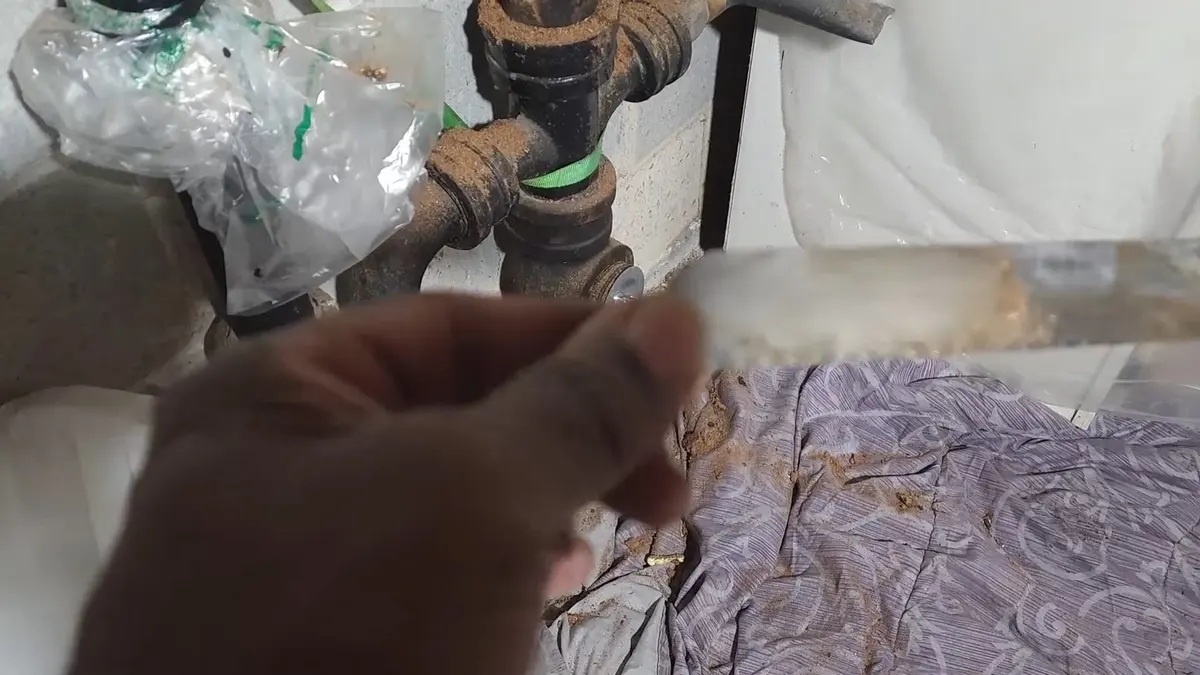
Walk through any older Altadena home with a flashlight pointed at the drain lines under the sinks, in the basement, or in the crawlspace, and you'll see them: heavy, black, iron pipes carrying the household waste water down to the main sewer lateral. Cast iron drain pipe was the dominant residential drain material from the late 1800s through about 1970, when ABS plastic and PVC began taking over.
Cast iron has real advantages. It's quiet (water flowing through it doesn't echo through walls the way plastic can), it's structurally strong, and it lasts a long time. But "a long time" turned out to be roughly 50-80 years in typical residential service. The pre-1970 cast iron in Altadena's older bungalows, craftsmans, and early mid-century homes is now hitting that range and starting to fail in recognizable patterns.
How cast iron drain pipe actually fails
Cast iron drains fail in three primary modes.
Channelization. The most common failure mode in residential cast iron. Over decades of flow, the inside bottom of the pipe wears away from the constant water-and-waste contact. The wear progresses gradually. Eventually the pipe wall at the bottom thins to the point of perforation, while the top of the pipe still looks fine. Camera inspection shows a distinctive worn channel along the bottom of the pipe.
Corrosion pitting. Cast iron exposed to mildly acidic waste water develops surface pitting that gradually deepens into perforations. Hot grease, harsh chemicals, and certain food waste accelerate this. Garbage disposal use is particularly hard on cast iron because of the constant acidic small-particle slurry.
Joint failures. Original cast iron joints were made with lead and oakum (a fiber gasket material). Over 60-100 years, the oakum dries out, the lead loses its seal, and the joint develops gaps that allow leakage and root intrusion (if the joint is below grade).
Failures usually present as small leaks first, then progress over time. A drain pipe with channelization will eventually develop a pinhole leak that drips slowly. A few months or years later, the wall has thinned enough that the pinhole expands into a larger crack.
Signs of cast iron drain failure
Most of the signs are recognizable to homeowners, though they're often attributed to other causes.
Musty or sewer-like smell. Gas escaping from cracks in drain pipes inside walls develops a recognizable smell that homeowners often describe as "musty" or "old basement." Persistent unexplained odor in a particular room or area suggests a hidden drain leak.
Slow drains that don't respond well to clearing. Channelization narrows the effective flow area. A drain that runs slow even after professional clearing, then runs slow again within months, suggests the pipe itself rather than a removable blockage.
Visible rust or moisture staining on walls or ceilings. Slow leaks from drain pipes show up as discoloration on the visible surfaces of walls or ceilings adjacent to plumbing chases. The discoloration often takes months to develop and is initially subtle.
Recurring drain backups. Cast iron drains with severe channelization combined with original joint failures back up more easily than newer drains. If you're clearing the same drain repeatedly, the pipe itself may be the issue.
Sagging floors or shifted tiles above drain runs. Long-term water exposure from undetected leaks weakens subflooring. Late-stage signs include sagging, soft spots, or shifted tile near drain runs.
Diagnosing the actual condition
Cast iron drain condition is best assessed by camera inspection. We run a video camera through accessible cleanouts and document the actual pipe condition along the length of the run. The camera shows channelization, joint condition, root intrusion if any, scale buildup, and any visible damage.
A camera inspection of accessible drain lines typically takes 1-2 hours and costs $200-$400. The findings are usually clear: the pipe is sound and has more life, or the pipe is at end of life and needs planning for replacement, or the pipe has a specific localized failure that can be spot-repaired.
For drain pipe inside walls or below slab that isn't accessible to camera inspection, we infer condition from what we can see at accessible points combined with how the system is performing overall. Inferences from accessible sections to inaccessible ones are reliable for pipes installed at the same time and in similar conditions.
Repair vs replacement
Three options exist depending on what camera inspection shows.
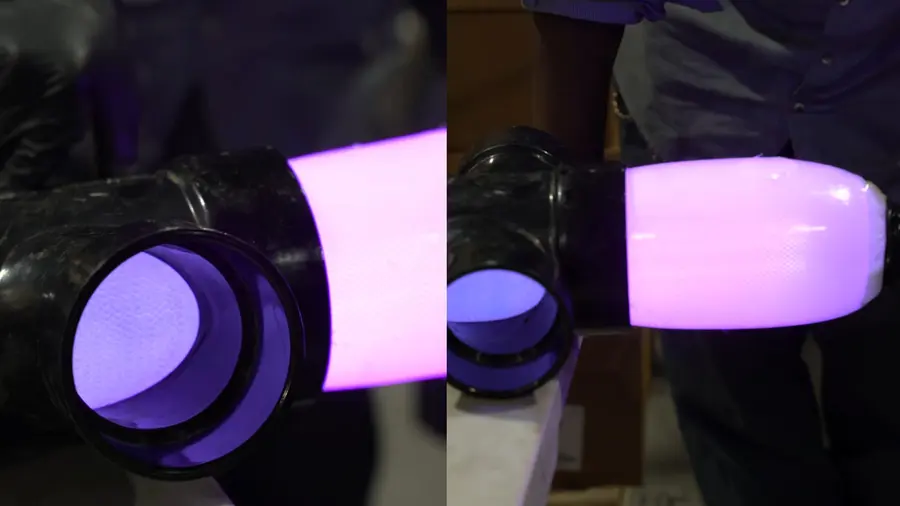
Spot repair works for localized failures. A cracked section, a failed joint, a localized hole can be cut out and replaced with new pipe (typically PVC where code allows) using appropriate transition fittings. Cost runs $800-$2,500 depending on access and which pipe section is affected.
Section replacement works when a particular drain run is clearly failing but the rest of the system is sound. Replacing the failing run with new pipe is more economical than chasing individual failures. Cost runs $2,500-$6,000 for typical residential drain sections.
Whole-house drain replacement is sometimes warranted when the system is broadly at end of life. This is a more involved project, often combined with other renovation work. Cost varies widely with house size and access but typically runs $8,000-$20,000+ for typical residential.
Sewer lateral (the line from the house to the city main) is a separate project from interior drain work, though the two often need attention in the same timeframe. See our sewer line replacement service page for that scope.
What materials we use for replacement
Modern drain pipe materials are PVC (for most residential applications) and cast iron (for sound dampening in high-end installations). California Plumbing Code allows both, with PVC dominant for cost and ease of installation.
PVC is durable, smooth-bored, resistant to corrosion, and resistant to root intrusion. Properly installed PVC drain has an expected service life of 50+ years. The main complaint about PVC is acoustic: water flow is audible through PVC pipe more than through cast iron. In high-end installations or where pipe runs through occupied spaces, we can use cast iron for specific runs and PVC elsewhere to manage both cost and sound.
What to do if you have cast iron drains
For most owners of pre-1970 Altadena homes, the practical approach is.
Don't panic. Cast iron drains don't fail catastrophically in a single event the way burst supply lines do. The failures are gradual, and you have time to plan.
Watch for the signs above. Slow drains, smells, recurring backups, and visible staining are the early signals.
Get a baseline camera inspection if you're seeing any of the signs or planning significant renovation work. The information helps you plan replacement in conjunction with other work, which is more economical than emergency replacement later.
Plan the work when convenient. Drain replacement can usually be scheduled around other projects and minimized for disruption. Coordinating with bathroom or kitchen renovation is often the right timing.
Most pre-1970 Altadena homes will need their cast iron drains addressed eventually. The question is timing and scope. Call (626) 687-0217 for camera inspection and an honest read on what your specific system needs.