Sewer Line Replacement in Altadena, CA
Full sewer lateral replacement via trenchless pipe bursting, CIPP lining, or traditional excavation. HDPE and PVC, LA County permitted, with landscape preservation when possible.
Sewer line replacement is the wholesale removal or replacement of the underground lateral that carries wastewater from your home to the city sewer main. Replacement differs from repair in scope. Repair fixes a single failure point or short section while leaving the rest of the line intact. Replacement addresses an entire lateral that has reached the end of its useful service life, with damage spanning the full length rather than just one location. For Altadena's older neighborhoods, where clay tile laterals from the 1920s through 1960s are reaching 70-100 years of service, replacement is increasingly the right call when camera inspection reveals system-wide deterioration.
When replacement is the right call instead of repair
The line between repair and replacement isn't always obvious. Camera inspection is what makes the call clear. We look at six factors:
Extent of damage. A single broken joint or one collapsed section can be spot-repaired. Failures distributed along the entire length call for replacement.
Pipe material condition. Clay tile that's cracked along multiple joints, cast iron with widespread internal corrosion (channelization, where the pipe has worn through at the flow line), or Orangeburg pipe (a bituminous fiber pipe used in some mid-century Altadena homes) at the end of its service life all warrant replacement rather than patchwork repair.
Belly severity. A pronounced sag in the lateral that collects standing water and waste can't be lined effectively. Re-grading the line requires excavation.
Repair history. A line that's had two or three spot repairs in recent years is signaling that more failures are coming. At that point continued patching is more expensive than full replacement.
Tree root pressure. Where root intrusion is severe enough that lining alone may not stop future entry through external soil pressure on weakened joints, replacement is the more durable solution.
Property plans. Owners planning to remodel, sell, or stay long-term sometimes choose replacement as a one-time fix even when repair would work short-term. The decision is partly financial, partly peace-of-mind.
Trenchless versus traditional excavation
Three replacement methods are available, and the right one depends on conditions in your specific situation.
Pipe bursting (trenchless)
A bursting head is pulled through the existing pipe via cable from an exit pit. The head fragments the old pipe outward into surrounding soil and simultaneously pulls a new HDPE pipe through the same path. Pipe bursting works on most lateral materials (clay, cast iron, Orangeburg, even some PVC) and produces a jointless fused-pipe result. Two small pits are needed (entry and exit); the rest of the lateral path is undisturbed. Most Altadena pipe bursting jobs complete in 1-2 days.
Cured-in-place pipe (CIPP) lining
For lateral pipe that still has structural integrity but is failing at joints or developing pinhole leaks, CIPP lining creates a new pipe within the old pipe. A resin-saturated felt or fiberglass liner is inserted, inflated to conform to the inside of the existing pipe, and cured to a hard finish. The result is jointless, root-resistant, and rated for 50+ year service. CIPP works through existing cleanout access with no excavation in most cases.
Traditional dig-and-replace
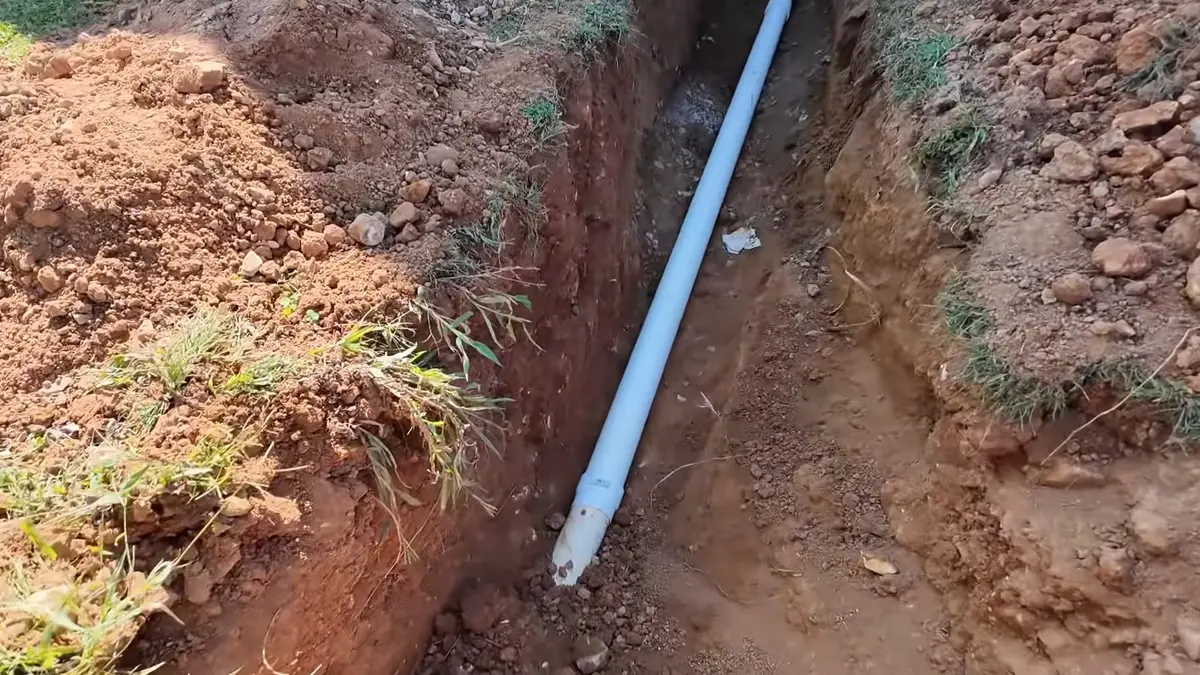
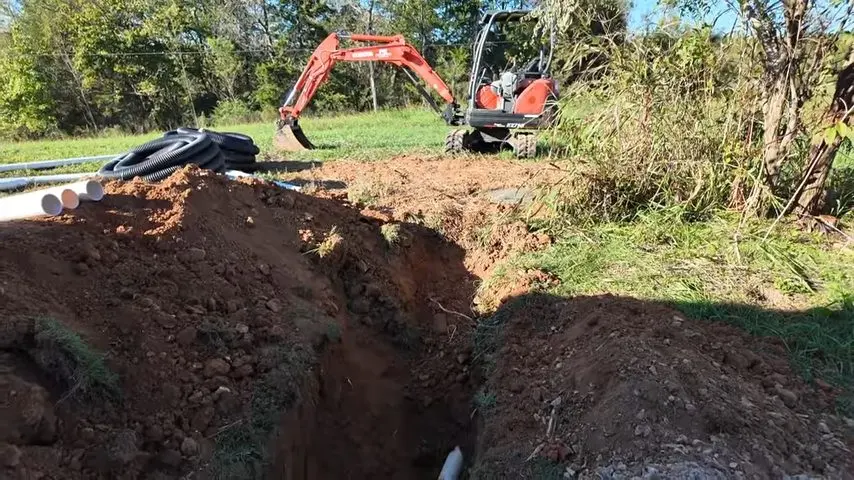
Trenching the full lateral path and laying new pipe remains the right approach for shallow lines, lines that need re-routing, situations where the lateral has multiple direction changes, or properties where soil conditions don't favor trenchless. We use SDR-35 PVC for new traditional installations, which is the LA County standard.
Materials and code
The two materials we install for replacement are HDPE (for pipe bursting) and SDR-35 PVC (for traditional excavation). Both dramatically outlast the clay and cast iron they replace. HDPE has a 100+ year design life and fused joints that don't separate. PVC has 50-100 year service life depending on conditions. Both resist root intrusion, corrosion, and mineral scale buildup that plagues older materials.
All replacement work pulls a plumbing permit. For unincorporated Altadena, we file through LA County Department of Public Works. For incorporated SGV cities (Pasadena, Glendale, La Cañada Flintridge, etc.), we file with the respective municipal building department. Inspection happens before backfill so the inspector can verify pipe materials, joints, slope, and bedding.
Cost of sewer line replacement in Altadena
Typical price ranges (Altadena / SGV market, 2026)
Pipe bursting (40-80 ft typical residential lateral): $9,000 - $18,000.
Cured-in-place pipe lining (40-80 ft): $10,000 - $20,000.
Traditional excavation replacement (40-80 ft): $8,000 - $22,000 depending on depth and surface restoration.
Driveway or sidewalk crossing (per crossing): Add $1,200 - $3,500.
City tap connection work: Variable; often included in base price, sometimes a separate municipal fee.
Camera inspection + locate + sketch: $400 - $650, often credited toward replacement.
Pricing varies with lateral length, depth, surface conditions, and the number of obstacles in the lateral path. We give a firm quote after camera inspection identifies what's actually there.
Other lateral work we handle alongside replacement
Beyond the core replacement scope, we install backwater valves on properties at risk of municipal sewer backup (especially important downhill from main pump stations or on streets with known surcharge history), install accessible cleanouts where homes don't have them, coordinate with landscape contractors on restoration of premium plantings disturbed during excavation, handle commercial sewer replacement for restaurants and offices, and provide pre-purchase camera inspection reports for real estate transactions. For background on LA County sanitation infrastructure, see the LA County Sanitation Districts.
Frequently asked questions
When does a sewer line need full replacement instead of repair?
Replacement is the right call when damage spans most of the lateral, when multiple sections have failed, when the existing pipe material has degraded throughout (severe cast iron corrosion, widespread clay joint failure), or when repeated spot repairs have already happened. Camera inspection makes the call clear: localized issues get repaired; system-wide failure gets replaced.
Trenchless or traditional excavation: which is better?
Trenchless is preferred whenever conditions allow because it preserves landscape, hardscape, and trees. CIPP lining works for pipes that are still structurally hosting; pipe bursting works for fully failed pipe along the same path. Traditional excavation is right when there are major direction changes, very shallow depth, or when the lateral path itself needs to change.
What materials do you use for new sewer lines?
For pipe bursting we install HDPE (high-density polyethylene), which is flexible, jointless when fusion-welded, and rated for 100+ year service life. For traditional excavation we install SDR-35 PVC, which is the LA County code-compliant standard for residential laterals. Both materials dramatically outlast the clay and cast iron they replace.
How long does sewer line replacement take?
Pipe bursting typically takes 1-2 days including excavation of entry and exit pits, pipe pull-through, and surface restoration. CIPP lining takes 1 day. Traditional excavation runs 2-5 days depending on lateral length, depth, and surface conditions (driveway crossings add time).
Will replacement damage my landscape?
Trenchless methods (pipe bursting and CIPP lining) require only small entry and exit pits, leaving most of the surface undisturbed. Traditional excavation opens a trench along the full lateral path. We minimize impact, separate topsoil and subsoil during dig, restore the trench with compacted fill, and replace surface materials (decomposed granite, sod, concrete) as part of the scope.
What permits are required for sewer replacement?
All sewer lateral replacement requires a plumbing permit. For unincorporated Altadena, we file through LA County Department of Public Works. For incorporated cities (Pasadena, Glendale, La Cañada Flintridge, etc.), we file with the respective municipal building department. We handle the permit, schedule inspection, and pass it before backfill.
How much does sewer line replacement cost?
For a typical 40-80 foot Altadena residential lateral: pipe bursting runs $9,000-$18,000 total; CIPP lining runs $10,000-$20,000 total; traditional excavation runs $8,000-$22,000 depending on depth and surface conditions. Sidewalk or driveway crossings add cost. We give a firm quote after camera inspection identifies the work scope.