Sewer Line Repair in Altadena, CA
Trenchless cured-in-place lining, pipe bursting, and traditional excavation repair for failed clay and cast iron laterals across the foothill SGV.
A sewer line repair fixes a damaged section of the underground pipe that carries wastewater from your home to the city sewer main. In Altadena, that pipe (the lateral) is most commonly clay tile in homes built before 1970, cast iron in homes built between 1950 and 1980, and PVC in homes built later. Each material fails in its own way and on its own timeline. Clay joints separate and admit tree roots. Cast iron corrodes from the inside out and develops scale that traps debris. PVC is generally trouble-free until something physically displaces it. Repair work in Altadena most commonly targets failing clay laterals in the older neighborhoods.
Why Altadena sees so many sewer line failures
Three local factors converge to make sewer lateral problems especially common in this market.
Aged clay tile laterals. Altadena's housing stock is heavily weighted toward homes built before 1970. The clay sewer laterals in those homes were installed with mortared joints between 2-3 foot sections. Mortar shrinks, settles, and eventually cracks over many decades. Once a joint opens even slightly, water leaks out and soil leaks in. Both invite roots.
Mature tree canopy. Altadena's character comes partly from its mature street trees. Christmas Tree Lane's century-old deodara cedars, the camphor and eucalyptus on Mariposa Street, the live oaks and sycamores throughout the older neighborhoods. Those trees have root systems that aggressively seek water, and a leaky clay joint is the most attractive water source in the immediate vicinity. Roots find them, enter through the gap, and over time fill the pipe interior.
Foothill drainage and slope movement. Altadena's upper neighborhoods sit on alluvial fan deposits at the base of the San Gabriel Mountains. Seasonal soil expansion and contraction puts lateral stress on any rigid pipe. Hillside lots in places like Lincoln Crest and Pasadena Glen also have steeper lateral slopes, which can accelerate erosion of bedding material around the pipe and lead to bellies (sagging sections) where waste collects.
Together these factors make sewer lateral work a meaningful slice of Altadena plumbing call volume. The good news is that current repair techniques are dramatically better than they were 20 years ago.
How we diagnose what the line needs
Diagnosis starts with a camera inspection. We feed a video camera through an accessible cleanout (most Altadena homes have one) and record the full length of the lateral from the house to the city tap. The recording shows exactly what's happening: clean pipe, surface buildup, root intrusion at specific joints, cracking, separation, bellies, or partial collapse.
Camera inspection also locates the depth and position of the line above ground, which matters for planning any excavation. Modern cameras have transmitters that broadcast a signal we can track with a locator, marking the line path along the surface so we know exactly where to dig if dig is needed.
For real estate transactions, pre-remodel scoping, or just baselining what's there, we provide a recorded camera inspection with annotated findings. Buyers and sellers in Altadena increasingly request sewer scope as part of inspection contingencies given the prevalence of lateral failures in the older housing stock.
Repair methods we use
The right repair depends on what the camera shows. We use four approaches.
Spot excavation repair
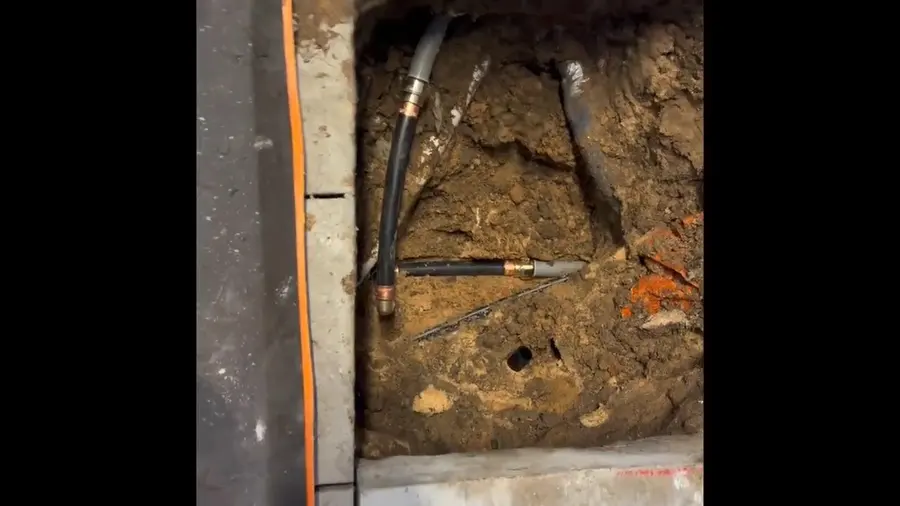
For an isolated failure (single bad joint, one short collapsed section), opening a small hole at the failure point and replacing the affected fitting or section is the most economical fix. Spot repairs typically take a day, leave most of the line intact, and cost a fraction of full replacement.
Cured-in-place pipe (CIPP) lining
For lines that are failing along most of their length but are still structurally hosting a liner, CIPP lining inserts a resin-saturated felt or fiberglass liner through the existing pipe, inflates it to conform to the pipe walls, and cures it (with heat, steam, UV, or ambient cure) into a new structural pipe within the old one. The result is a smooth, jointless, root-resistant pipe with a 50-year warranty. The work is done through existing access points with minimal excavation.
Pipe bursting
For lines that are too far gone for lining (severe collapse, no remaining structural integrity) but where digging the full length isn't desirable, pipe bursting pulls a bursting head through the old pipe. The head fragments the old pipe outward and simultaneously pulls a new HDPE pipe through the same path. Bursting needs entry and exit pits but doesn't require trenching the full length.
Traditional excavation replacement
For situations where trenchless isn't appropriate (very shallow lines, lines with major direction changes, lines where the city tap configuration requires full excavation), traditional dig-and-replace remains the right approach. We minimize landscape impact, document the work for permitting, and restore the surface when done.
Cost of sewer line repair in Altadena
Typical price ranges (Altadena / SGV market, 2026)
Camera inspection + locate + report: $400 - $650.
Spot excavation repair (single section, accessible): $1,500 - $4,500.
Spot excavation repair (under driveway or deep): $3,500 - $8,000.
Cured-in-place pipe lining: $130 - $220 per linear foot.
Pipe bursting: $90 - $200 per linear foot.
Full traditional excavation replacement: $7,000 - $18,000 typical residential lateral.
Cleanout installation (none present): $750 - $1,800.
A typical Altadena lateral runs 40-80 feet from the house to the city tap. At those lengths, trenchless methods often come in at or below traditional dig-and-replace cost, with dramatically less landscape and hardscape disruption.
Other sewer line work we handle
Beyond core repair, we install backwater valves on properties at risk of municipal sewer backup, install cleanouts where homes don't have them, perform root removal as a maintenance service for lines we've already lined or that aren't yet ready for repair, set up annual or biannual camera inspection plans for high-risk lines, and handle commercial sewer work for restaurants and offices. We also coordinate with LA County DPW and incorporated city public works departments on permitting and inspection. For SGV sewer infrastructure context, the LA County Sanitation Districts publish public records on the regional system.
Frequently asked questions
Why are sewer line problems so common in Altadena?
Three factors converge. Most Altadena homes built before 1970 have clay sewer laterals with mortared joints that fail over decades. Mature trees on streets like Mariposa, Lincoln Avenue, and Santa Rosa (Christmas Tree Lane) send roots through those joint failures. And hillside drainage in the upper foothill neighborhoods puts additional ground movement stress on lateral pipes. Together that means more sewer calls per capita than flatter, newer cities.
How do you know if a sewer line needs repair or can be cleaned?
Camera inspection tells the difference. A line that just has buildup but is structurally sound can be cleaned (snake or jet). A line with cracks, separated joints, sagging (a "belly"), or partial collapse needs repair. The video shows what's actually happening and removes the guesswork.
What is trenchless sewer repair?
Trenchless repair fixes the line without digging up the whole length. The two main techniques are cured-in-place pipe lining (a resin-saturated liner is inserted, expanded, and cured inside the existing pipe to create a new pipe within the old one) and pipe bursting (a bursting head pulls a new pipe through the path of the old one, fragmenting the old pipe outward). Both methods minimize landscape and hardscape damage.
When does spot excavation make more sense than trenchless?
Spot excavation is the right choice when only a short section has failed and the rest of the line is sound. For a single sag or one bad joint, opening a small hole and replacing the affected fitting is cheaper and just as durable. Trenchless is better when most of the line needs replacement or when the whole line is showing age.
How long do trenchless sewer repairs last?
Cured-in-place liners typically come with 50-year manufacturer warranties and have similar expected service life. Pipe bursting installs new HDPE pipe with a 100-year design life. Both methods produce results that outlast traditional dig-and-replace clay or cast iron installations.
Do I need an LA County permit for sewer line repair?
Yes for any repair that opens the lateral or replaces a significant section, and yes for trenchless lining and bursting. We pull all required permits through LA County DPW or the appropriate municipal authority for incorporated cities (Pasadena, Glendale, etc.) and handle inspection scheduling.
How much does sewer line repair cost in Altadena?
Spot excavation repair runs $1,500-$4,500 depending on depth and access. Trenchless lining typically runs $130-$220 per foot for a typical residential lateral. Pipe bursting runs $90-$200 per foot. Full lateral replacement by traditional excavation runs $7,000-$18,000 for typical Altadena lot configurations. We give a firm price after camera inspection.