Water Line Installation & Repair in Altadena, CA
Yard supply line repair and full replacement, trenchless options where conditions allow. Copper, PEX, and HDPE materials for Altadena and SGV residential properties.
Water line installation and repair covers the underground supply piping that delivers municipal water from the street to your home. This line runs from the city main connection (usually at the curb or property line) to the meter and then to the house. The homeowner owns and maintains the line from the meter to the house. When that line leaks, ages out, or needs upsizing for added demand, we handle the work with traditional excavation or trenchless methods depending on what the situation allows.
When water lines fail in Altadena homes
Yard supply lines fail in patterns that track with the housing eras represented in Altadena's neighborhoods.
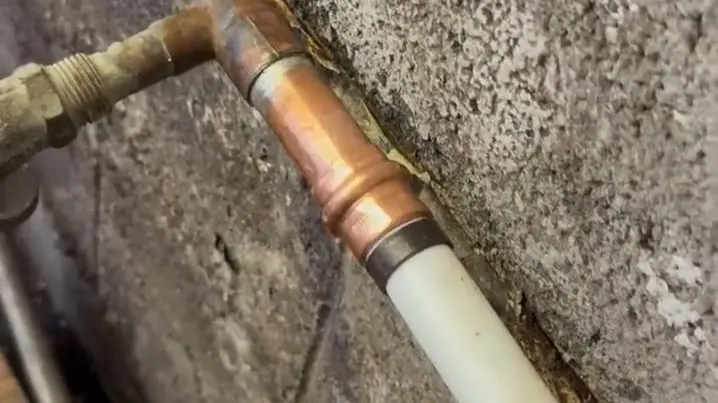
Galvanized service lines in homes built before 1960 are the most common source of yard line failure today. Galvanized was the standard service line material for decades; it's now 60-100 years old in most Altadena homes that still have it. Failures take the form of pinhole leaks, full pipe wall failures at corroded sections, and gradual flow restriction from interior rust buildup.
Original copper service lines from the 1960s-1980s are reaching the end of typical service life. Type M copper used in some older installations corrodes faster than the heavier Type K used today. We see pinhole leaks in mid-century copper service.
Polybutylene service lines from the 1978-1995 window are known to fail unpredictably. Any polybutylene service line should be planned for replacement.
Root intrusion damage to plastic service lines from mature trees can crack lines at joints or at the line itself. Altadena's mature tree canopy along streets like Mariposa, Lincoln Avenue, and Santa Rosa creates real root pressure on underground utilities.
Settling and ground movement can stress old joints. Foothill properties with even minor slope tend to develop more line failures than perfectly flat lots.
How we diagnose water line problems
Diagnosis follows a logical sequence. We rarely dig before knowing what's there.
Water meter test
First step on any suspected leak. Shut all fixtures off. Watch the meter dial. Movement means active flow somewhere between the meter and the house. No movement means the issue is elsewhere or intermittent.
Acoustic line tracing
For confirmed yard leaks, acoustic detectors can pick up water sound underground and identify the leak point within feet. Combined with a line tracer (a transmitter sending a signal through the line, picked up by a locator on the surface), we map the line path and find the leak.
Pressure testing
Isolating the service line and pressurizing it to confirm leak presence and rule out fixture-side issues. Pressure drop over time indicates a leak; holding pressure means the line is sound.
Pressure regulator inspection
Often paired with line work. High system pressure (above 80 PSI) shortens fixture and pipe life and is itself a cause of recurring leaks. Pressure regulator inspection and replacement is part of larger water line work.
Repair methods
For isolated leaks on otherwise sound lines, spot repair is the right approach.
Excavation spot repair. Digging down to the leak point, cutting out the failed section, and installing a coupling or short replacement length. For galvanized service lines, we typically transition the failed section to copper or PEX with a dielectric union to prevent galvanic corrosion at the junction. Most spot repairs complete same-day.
Connection repair at meter or house entry. Many "service line" leaks are actually at the meter pit fitting or at the point where the line enters the house foundation. These connection-point fixes are easier and faster than line-length repair.
Pressure regulator replacement. When recurring failures or pressure issues point to a failing or absent regulator, we install one near the house entry.
Full water line replacement
When the line has multiple failures, when galvanized has corroded throughout, or when the line is so old that more leaks are predictable, full replacement is the right call.
Pipe bursting (trenchless)
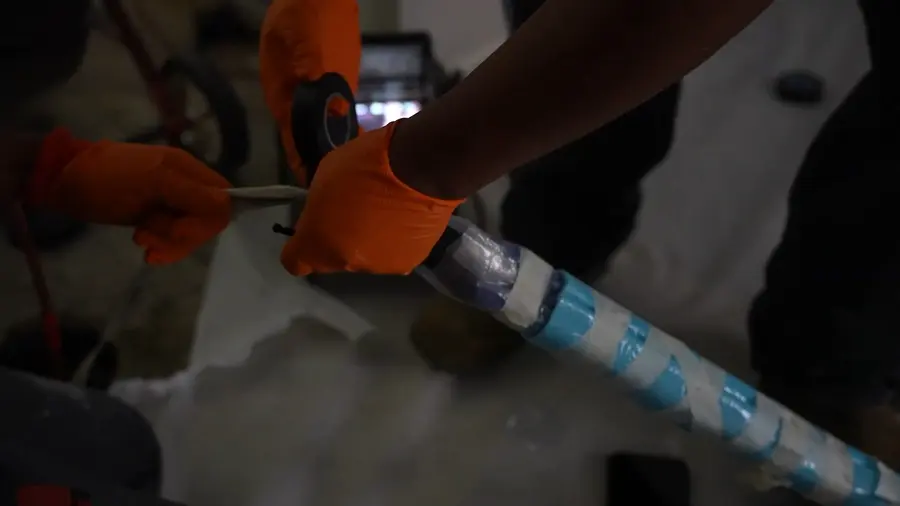
A bursting head is pulled through the existing service line via cable, fragmenting the old pipe outward into surrounding soil and pulling a new HDPE pipe through the same path. Two access pits required (at the meter and the house). The rest of the yard surface stays undisturbed. Most residential service line bursts complete in one day.
Directional boring
For new service line installation along a route different from the existing line, directional drilling creates a path underground with small entry and exit pits. Used when re-routing service to avoid trees, hardscape, or other obstacles.
Traditional trench-and-replace
Open-cut excavation of the full line path, installing new pipe, and backfilling. Slower and more disruptive than trenchless but sometimes necessary for shallow lines, lines under multiple hardscape features, or routes that require shape changes.
For new service line material, our primary choices are Type K copper (the heaviest-wall copper, rated for direct burial), PEX-A (very durable and flexible, good for trenchless), or HDPE (used in pipe bursting for jointless replacement). All three significantly outlast the materials they replace.
Cost of water line work in Altadena
Typical price ranges (Altadena / SGV market, 2026)
Spot leak repair (accessible depth): $450 - $1,200.
Spot repair under hardscape: $700 - $2,000.
Trenchless service line replacement (typical residential): $4,500 - $9,500.
Traditional trench-and-replace: $4,000 - $10,500.
Driveway or sidewalk crossing (per crossing): Add $800 - $2,500.
Pressure regulator install/replace: $375 - $850.
Pressure test and leak locate: $300 - $550 (often credited toward repair).
Service line upsize (3/4" to 1"): Add 10-20% to base replacement cost.
Pricing depends on line length, depth, surface conditions, and the specific method chosen. We give a firm quote after leak location and route assessment.
Other water supply work we handle
Beyond service line work, we install whole-house shutoff valves where homes lack accessible ones, install pressure regulator and pressure tank combinations on properties with marginal supply pressure, set up earthquake automatic shutoff valves (increasingly common in California seismic zones), handle service line upsizing for homes adding pools, tankless water heaters, or other high-demand fixtures, and provide pre-purchase service line inspections for real estate transactions. For California water service line code requirements, see the California Building Standards Commission.
Frequently asked questions
How do I know my main water line is failing?
Signs include wet spots in the yard along the line's path, water bill increases without a known cause, reduced pressure throughout the home, discolored water at first draw, and the water meter dial moving when all fixtures are off. Any one signal warrants inspection; multiple together usually point to active leak.
What is a yard line or service line?
The yard or service line is the underground water supply that runs from the city main shutoff (usually at the curb or property line) to your house. It's the piping that delivers municipal water to your home's plumbing system. The water provider owns the line up to the meter; the homeowner owns it from the meter to the house.
What materials do you use for new water line installation?
For yard line replacement, our primary choices are Type K copper (the heaviest-wall copper, rated for direct burial) or PEX-A. For larger residential or commercial service, HDPE is also an option. We discuss material choice based on soil conditions, line depth, route, and budget.
Can yard lines be replaced without digging up the whole yard?
Often yes. Pipe bursting and directional boring methods let us replace water service lines with minimal surface disruption. Two access pits at the start and end points are needed; the rest of the path stays undisturbed. Trenchless is preferred whenever soil conditions and the route allow.
How deep are residential water lines buried in Altadena?
California code calls for residential water service lines to be buried at least 12 inches below grade for protection. In practice, most Altadena yard lines are 18-30 inches deep. Older lines may be at varying depths. Lines that cross paved areas or driveways are usually deeper.
Do I need a permit to repair or replace my water line?
Spot repairs of an existing line usually don't require a permit. Full water line replacement, new installation, or service line size upgrade does require a permit. For unincorporated Altadena we file through LA County DPW; incorporated cities have their own building departments. Permits include inspection.
How much does water line work cost in Altadena?
Spot leak repair runs $450-$1,500 depending on depth and access. Trenchless yard line replacement runs $4,500-$9,500 for typical residential lengths. Traditional trench-and-replace runs $4,000-$10,500 depending on length and surface restoration. Hardscape and driveway crossings add cost.