Burst Pipe Repair in Altadena, CA
Emergency response for active pipe failures: copper pinhole bursts, galvanized blow-outs, PEX fitting separations, and freeze-related splits. Same-day across the SGV.
Burst pipe repair is the urgent repair of a water supply line that has failed open and is releasing water. Unlike a slow leak that develops gradually, a burst pipe creates an immediate flooding situation that puts the home at risk of significant damage by the hour. The repair is two-part: stop the active water flow, then replace or repair the failed pipe section. For Altadena homeowners, the time between burst and successful shutoff is the single biggest variable in how much damage the failure causes. Knowing where your main shutoff is, before you need it, can save tens of thousands of dollars.
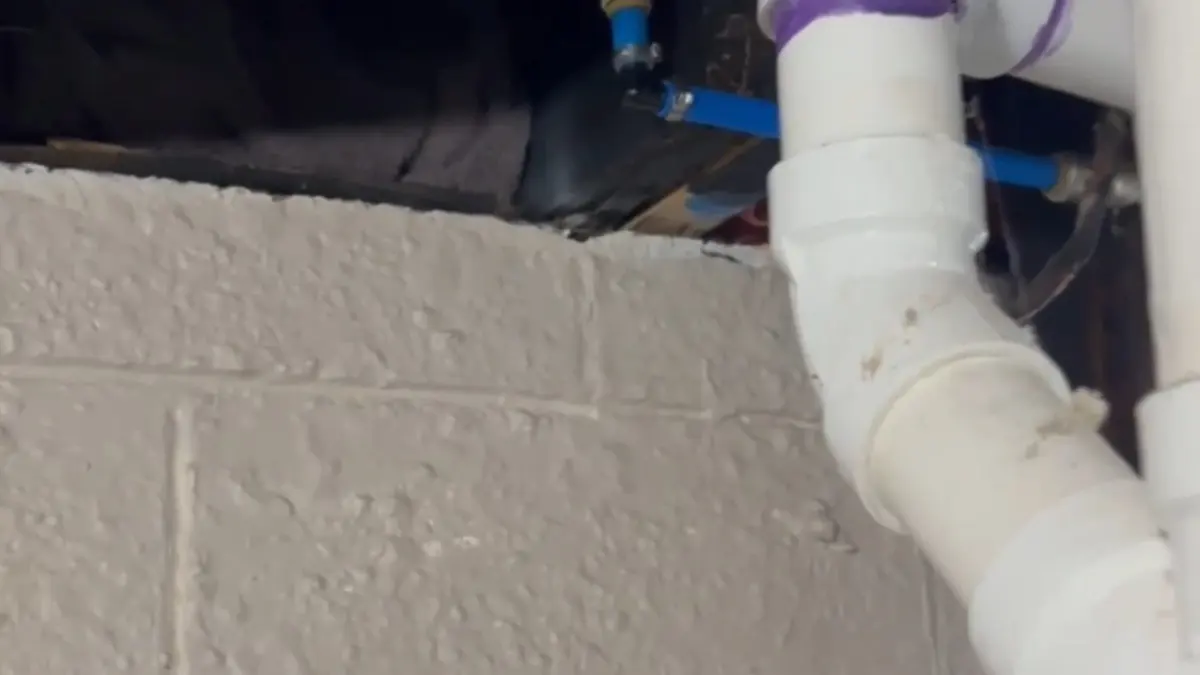
What causes pipes to burst in Altadena
Burst failures cluster around specific causes that are common in this market.
Copper pinhole corrosion. Copper supply lines develop tiny corrosion pits that gradually deepen until the pipe wall fails. Once a pinhole opens, water pressure widens it within hours or days into a true burst. Hot water lines fail first because heat accelerates the chemistry. Altadena's moderately hard foothill aquifer water can accelerate copper corrosion compared to softer-water regions.
Galvanized pipe failures. Galvanized steel pipe was standard in Altadena homes built before 1960. After 50-70 years of service, the zinc galvanizing has corroded through and the steel underneath is reacting with water. Fittings fail first, usually at threaded joints where the pipe is thinnest. A failed galvanized fitting often releases a lot of water fast.
PEX fitting separations. PEX tubing itself almost never fails. The crimp or expansion fittings can separate if the original crimp wasn't sized correctly or if the fitting was installed with damaged O-rings. These failures often occur years after installation when temperature cycling loosens a marginal fitting.
Freeze-related splits. Rare in Altadena but not unheard of during cold snaps. Uninsulated copper lines in unheated crawlspaces or attics can freeze, expand, and split. Damage shows up as soon as the line thaws and water flows again.
Mechanical impact. Construction activity, renovation work, or even an accidental hit during DIY projects can damage pipes and cause delayed-failure bursts.
How we stop the damage first
On every burst call, the first priority is stopping the water flow. Once that's done, the rest of the work is straightforward repair.
Main shutoff isolation
The main shutoff valve isolates the home from the city supply. It's typically at the front of the property near the meter or curb, or on the side of the house near where the supply line enters. We can talk you through finding it on the phone if you don't already know where it is. (Worth finding now, before you need it.)
Localized shutoff at fixture or branch
If the burst is at or near a specific fixture or branch line, an angle stop or branch shutoff may isolate just that section without taking the whole house offline. This is often faster than running to the main if the home has working branch shutoffs.
Pressure release
After shutoff, opening a low fixture (an outdoor hose bib or low bathroom faucet) drains residual pressure from the system and stops drips at the burst point while we set up for repair.
Damage limitation
If water has reached living areas, we move what we can, lift saturated rugs, and document the damage with photos for your insurance claim before repair work begins.
Repair methods we use
The right repair depends on the pipe material, the burst location, and the condition of the surrounding pipe.
Copper section replacement. The most common burst repair. We cut out the failed section, smooth the cut ends, and install a coupling or short replacement pipe section using sweat or press fittings. Same-day completion in most cases.
Galvanized transition repair. When a galvanized fitting fails, we typically transition the failed section to copper or PEX using a dielectric union to prevent galvanic corrosion between materials. This buys time while the rest of the galvanized system continues to work, but it's also a signal that broader repiping should be planned.
PEX fitting replacement. Failed PEX fittings get cut out and replaced with new crimp or expansion fittings. The repair is quick and the result is more durable than the original failure point.
In-wall repair. Bursts inside wall cavities require small openings to access the failed pipe. We cut precisely, complete the repair, and arrange for drywall patching (we can recommend a finishing contractor or handle small patches ourselves).
Under-slab repair or rerouting. Slab-embedded line failures are covered in detail on our slab leak detection page. The choices are spot penetration repair or rerouting through walls and ceilings.
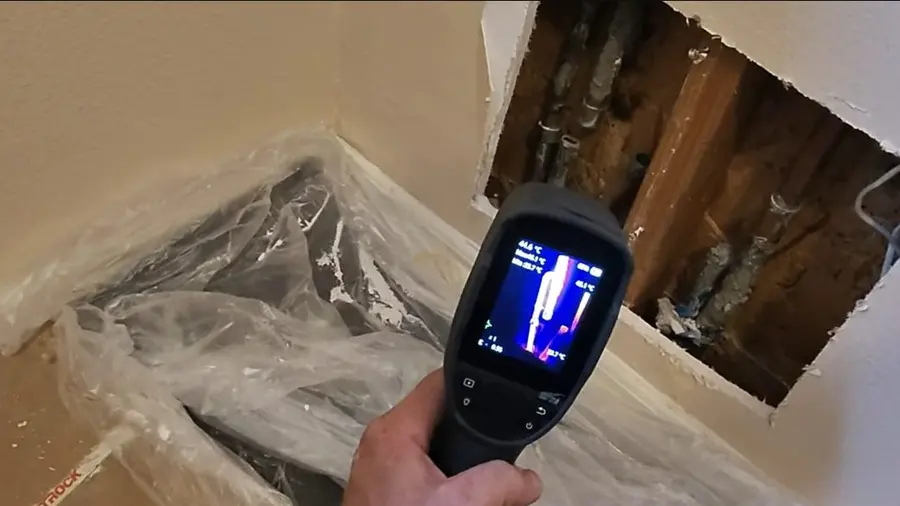
Cost of burst pipe repair in Altadena
Typical price ranges (Altadena / SGV market, 2026)
Accessible copper section repair: $300 - $750.
Galvanized fitting failure repair: $400 - $1,000.
PEX fitting replacement: $250 - $550.
In-wall pipe repair (small opening): $500 - $1,500.
Under-slab burst pipe repair: $1,500 - $3,500 (often combined with slab leak detection).
Emergency / after-hours dispatch fee: Add $85 - $175.
Insurance documentation report: Included on all burst calls.
Final price depends on access, pipe material, and whether additional pipe sections need replacement beyond the immediate burst. We give a firm price before work begins.
Other emergency pipe work we handle
Beyond active burst response, we handle proactive pipe replacement for systems showing multiple recent burst patterns (a signal that more failures are coming), pressure regulator inspection and replacement (high system pressure is a leading cause of burst failures), water hammer arrestor installation for systems with banging pipes after fixture shutoffs, and full repipe planning for homes where the existing system has reached the end of its service life. We coordinate with water damage restoration contractors when significant cleanup is needed and provide documentation for insurance claims. The IICRC publishes industry standards for water damage restoration that homeowners can reference.
Frequently asked questions
What should I do first if a pipe bursts?
Shut off the main water valve to the home immediately. It's usually at the front of the property near the meter or curb. Stopping the water flow is the single most important step to limit damage. Then call us. If the leak is electrical-adjacent (near a panel, switch, or outlet), also shut off power to that area at the breaker.
What causes pipes to burst in Altadena?
The most common causes here are copper pinhole corrosion that suddenly fails open, failed galvanized fittings on aging pipes, PEX fitting separations from poor original crimps, and freeze-related splits during cold snaps in homes with uninsulated crawlspace or attic pipe runs. Slab leaks can also escalate from a slow leak to a burst over time.
Can a burst pipe be repaired or does it need full replacement?
It depends on the pipe's overall condition. A single burst in an otherwise sound copper line can be cut out and replaced with a coupling repair. A burst in heavily corroded galvanized signals the rest of the system is failing too and repiping should be on the near-term horizon. PEX fitting failures get the fitting replaced. We evaluate the pipe at the burst point and explain what we see.
How fast can you get to a burst pipe call?
For Altadena and adjacent SGV addresses, most burst pipe calls get a technician on site within 60-90 minutes during business hours, and within 90-120 minutes for overnight emergency calls. Call us and shut off the main while we're on the way.
Will my homeowner's insurance cover burst pipe damage?
Most California homeowner policies cover sudden and accidental water damage from a burst pipe, including drying, drywall replacement, flooring repair, and other restoration work. Coverage for the pipe repair itself varies by policy. We provide detailed invoices and damage photos that you can submit to your insurer.
My pipe didn't fully burst but is dripping at a fitting. Still an emergency?
Less urgent than active spraying, but yes, address it quickly. A fitting leak getting worse during the day often becomes a full burst overnight. Shut off the main if you'll be away for any extended time and schedule the repair as soon as possible.
How much does burst pipe repair cost?
Accessible pipe repairs in Altadena typically run $300-$1,200 depending on pipe material, location, and how much pipe needs replacement. In-wall or under-slab repairs run $600-$3,000+. Emergency dispatch adds $85-$175 to the cost. We give you a firm price before work begins.