Backflow Testing & Installation in Altadena, CA
Annual certification, RPZ and DCV assembly installation, repair of failed assemblies. California Title 17 compliant across Altadena and the SGV.
Backflow testing and installation covers the prevention assemblies that protect public water supply from contamination originating on private property. These assemblies sit at the connection between a building's plumbing and the public water system at points where contamination could enter the public supply (most commonly irrigation systems, fire suppression, and commercial process water). California requires annual testing of every assembly, and assemblies that fail testing must be repaired or replaced quickly. The work is regulated, certification-required, and happens on a calendar schedule rather than just when something breaks.
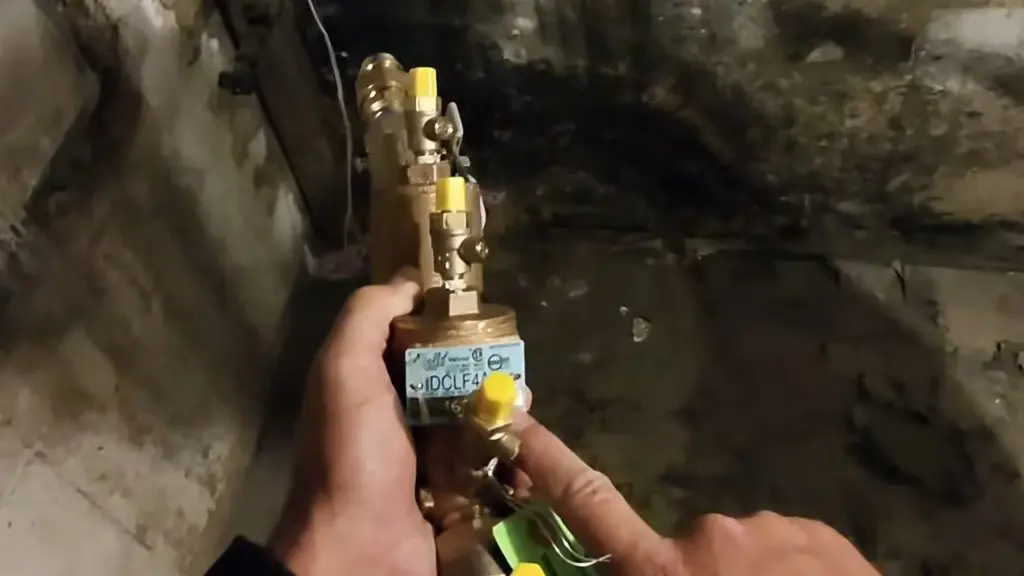
What backflow is and why it matters
Water in a municipal supply system normally flows in one direction: from the source through distribution mains to your property. Backflow is what happens when that direction reverses, even briefly, and water from your property flows back into the public supply.
The reversal can happen for several reasons. A water main break upstream of your property creates a vacuum that siphons water backward. A fire hydrant pulling high volume nearby drops local pressure and can pull water from connected properties. System maintenance shutdowns cause similar pressure changes. Any of these events, combined with a cross-connection on your property (a point where drinking water and non-drinking water can mix), creates an opening for contamination to enter the public supply.
The cross-connections that matter most in Altadena residential properties are irrigation system supply (where fertilizer or pesticide residue could siphon back), fire sprinkler systems with antifreeze additives, swimming pool fill connections without proper air gaps, and boiler systems with chemical water treatment. For commercial properties, the cross-connections multiply: process water, cooling towers, commercial dishwashers, chemical injection systems.
California Title 17 cross-connection control
California Title 17 of the California Code of Regulations is the state-level framework that defines cross-connection control requirements. The relevant rules establish what types of cross-connections require backflow prevention, what assemblies are approved, who can install and test them, and how often testing must happen.
The core requirements:
Annual testing of every backflow prevention assembly. Testing must be performed by a certified backflow assembly tester. Test results get submitted to the water provider, which maintains compliance records.
Test failures must be corrected. Assemblies failing the annual test must be repaired or replaced and re-tested within the window specified by the water provider, typically 30 days from notification.
Specific assembly types matched to hazard level. Title 17 specifies which assemblies are appropriate for which cross-connection hazards. Lower-hazard applications can use simpler DCV assemblies; higher-hazard applications require RPZ assemblies.
Installation by qualified contractors. Backflow assembly installation requires a permit and must be performed by appropriately licensed contractors.
For Altadena, the local water providers (Lincoln Avenue Water Company, Las Flores Water Company, Kinneloa Irrigation, Rubio Cañon, Pasadena Water & Power) administer their own cross-connection control programs under Title 17. They send annual test notices to property owners with installed assemblies. They track compliance and follow up on failed tests. They can suspend water service for ongoing non-compliance, though that's rare.
For the broader regulatory framework, the California State Water Resources Control Board oversees drinking water protection.
Annual testing process
The annual test is a straightforward inspection of the assembly's working components.
Visual inspection. We check for visible damage, leaks, missing parts, or installation issues that need correction before testing.
Differential pressure testing. Using a backflow test kit, we measure pressure differentials across the assembly's check valves. Passing thresholds are defined in Title 17. Failing pressure differentials indicate worn or damaged internals.
Shut-off valve testing. Both isolation shut-offs (upstream and downstream of the assembly) get checked for proper operation.
Certification submission. Passing test results are documented on the standard test form and submitted to your water provider. The certification is good for one year.
Testing typically takes 20-40 minutes per assembly. Water service to that specific connection is interrupted briefly during the test; we coordinate timing if the connection serves something that can't be off (rare for residential irrigation).
Installation work
New backflow assembly installation happens for several reasons: new irrigation systems on properties without existing assemblies, new fire suppression systems, commercial buildings during construction or change of use, and replacement of failed assemblies that can't be repaired.
Assembly selection. We help select the right assembly type for the application. DCV for low-hazard irrigation. RPZ for higher-hazard applications including irrigation with chemical injection, fire systems with antifreeze, and most commercial uses. We work with major manufacturers including Watts, Wilkins, Febco, and Apollo.
Permit and pre-installation. Backflow installation requires a plumbing permit. We file with LA County DPW for unincorporated Altadena or municipal departments for incorporated cities. The water provider also has approval requirements; we handle communication on their end.
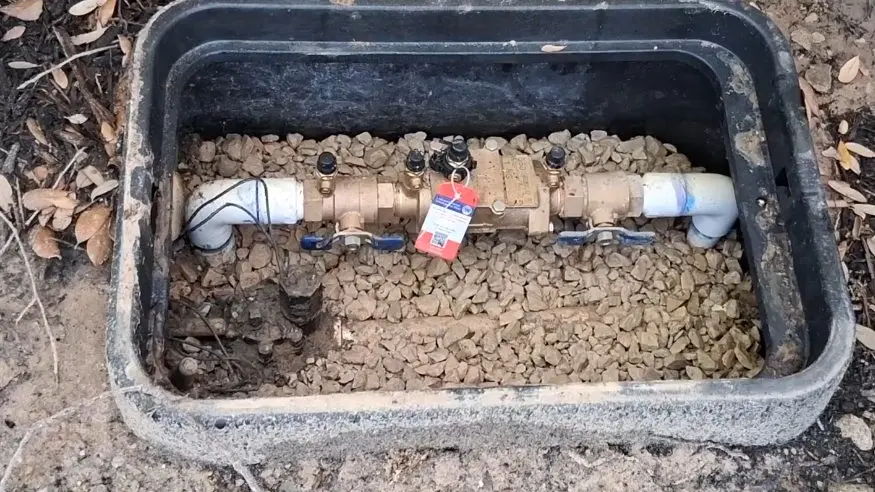
Installation. Assemblies install in an enclosure (typically a green plastic box at grade or above-grade for RPZ requiring atmospheric vent) at the point of connection between the protected line and the property's plumbing. Proper drain provision is critical for RPZ assemblies that periodically discharge water.
Initial certification. Newly installed assemblies must pass their first test before being put into service.
Cost of backflow work in Altadena
Typical price ranges (Altadena / SGV market, 2026)
Annual residential backflow testing (single assembly): $75 - $175.
Annual commercial testing (per assembly): $125 - $300.
Multi-assembly properties (per additional assembly): Add $50 - $125.
DCV assembly installation (3/4" - 1"): $475 - $850.
RPZ assembly installation (3/4" - 1"): $850 - $1,800.
Large RPZ (1.5" - 2", commercial): $1,400 - $2,800.
Assembly repair (failed components): $200 - $650.
Above-grade enclosure (winter protection): Add $150 - $400.
Re-test after repair: Often included with repair pricing.
Other related work we handle
Beyond core backflow services, we install irrigation main shutoff valves alongside backflow assemblies, set up backflow on fire suppression systems for residential fire-protected properties, handle commercial backflow programs with multiple-assembly buildings, provide consultation on cross-connection control for property managers, install hose bib vacuum breakers and other point-of-use backflow protection (covered partly on the hose bib page), and replace dated or non-compliant assemblies with current Title 17 approved models.
Frequently asked questions
What is backflow and why does it matter?
Backflow is the reverse flow of water from a property back into the public water supply. It can happen when supply pressure drops (main break, firefighting demand, system maintenance) and contaminated water from irrigation, fire protection systems, boilers, or industrial uses siphons back into drinking water lines. Backflow prevention assemblies stop this from happening.
Do I need annual backflow testing in Altadena?
If your property has an irrigation system, fire suppression system, boiler with chemical treatment, or commercial process water connection, yes. California Title 17 requires annual testing of all backflow prevention assemblies, and your water provider sends an annual notice. Single-family residential homes without irrigation systems typically don't have testable assemblies.
What's the difference between RPZ and DCV assemblies?
DCV (double check valve) assemblies are used for lower-hazard applications like irrigation systems without chemical injection. RPZ (reduced pressure zone) assemblies are used for higher-hazard applications like fire suppression with antifreeze, boilers with chemical treatment, and commercial process water. RPZ offers stronger protection but costs more and requires more space.
My backflow assembly failed testing. What now?
Failed assemblies must be repaired or replaced within a short window specified by your water provider (typically 30 days). We assess what failed (check valve, relief valve, shut-off valves), repair what's repairable, and replace the assembly if repair isn't cost-effective. Then we re-test and submit passing certification.
Who can perform backflow testing in California?
Only certified backflow assembly testers can perform the annual test. California Title 17 specifies certification requirements. The test results get submitted to your water provider for compliance tracking.
Where is my backflow assembly located?
For most Altadena residential properties with irrigation, the backflow assembly is in the front yard near the irrigation main shutoff, often in a green or beige enclosure box. For commercial properties, it's typically near the water service entry. If you've received an annual test notice but can't find the assembly, we can locate it as part of the test visit.
How much does backflow testing and installation cost?
Annual residential backflow testing runs $75-$175. Annual commercial testing runs $125-$300 depending on assembly size. DCV assembly installation runs $475-$850. RPZ assembly installation runs $850-$2,200 depending on size. Repair of failed assemblies runs $200-$650 depending on what needs work.